Luoxiongichthys hyperdorsalis
Kyphosichthyidae
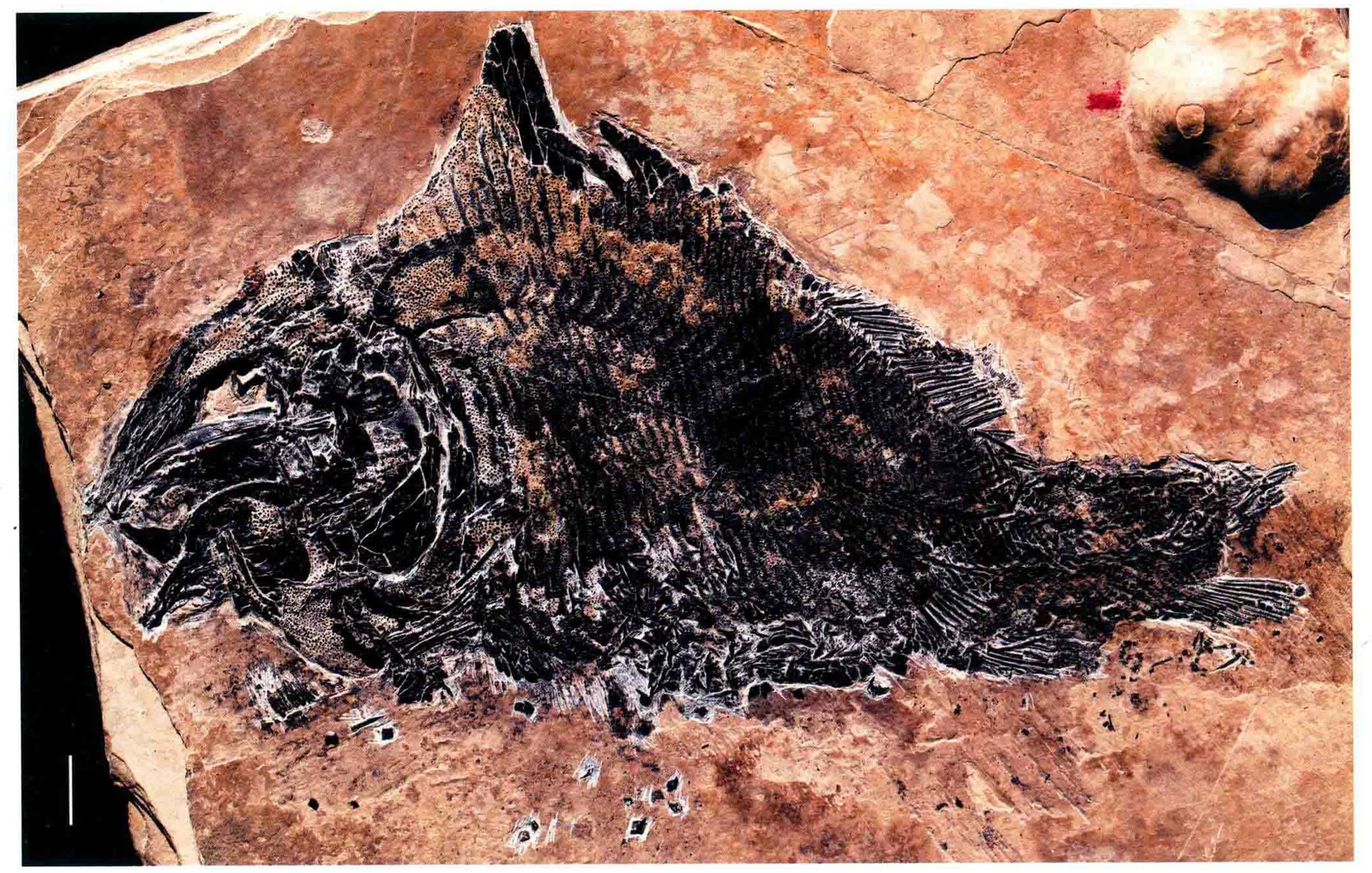
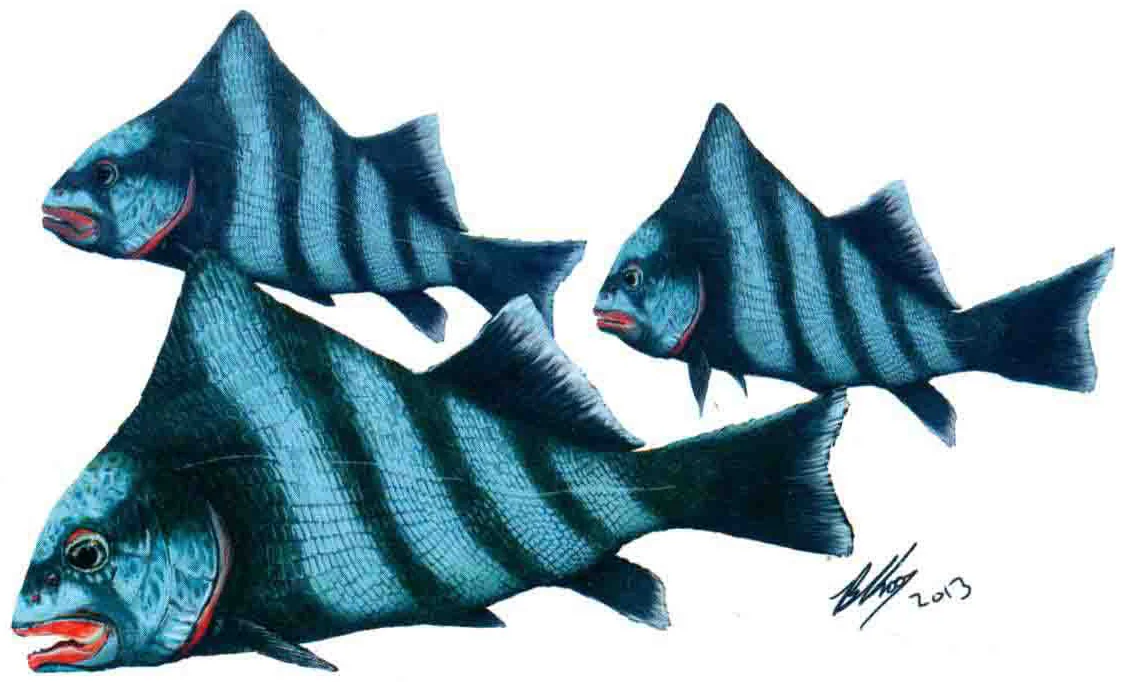
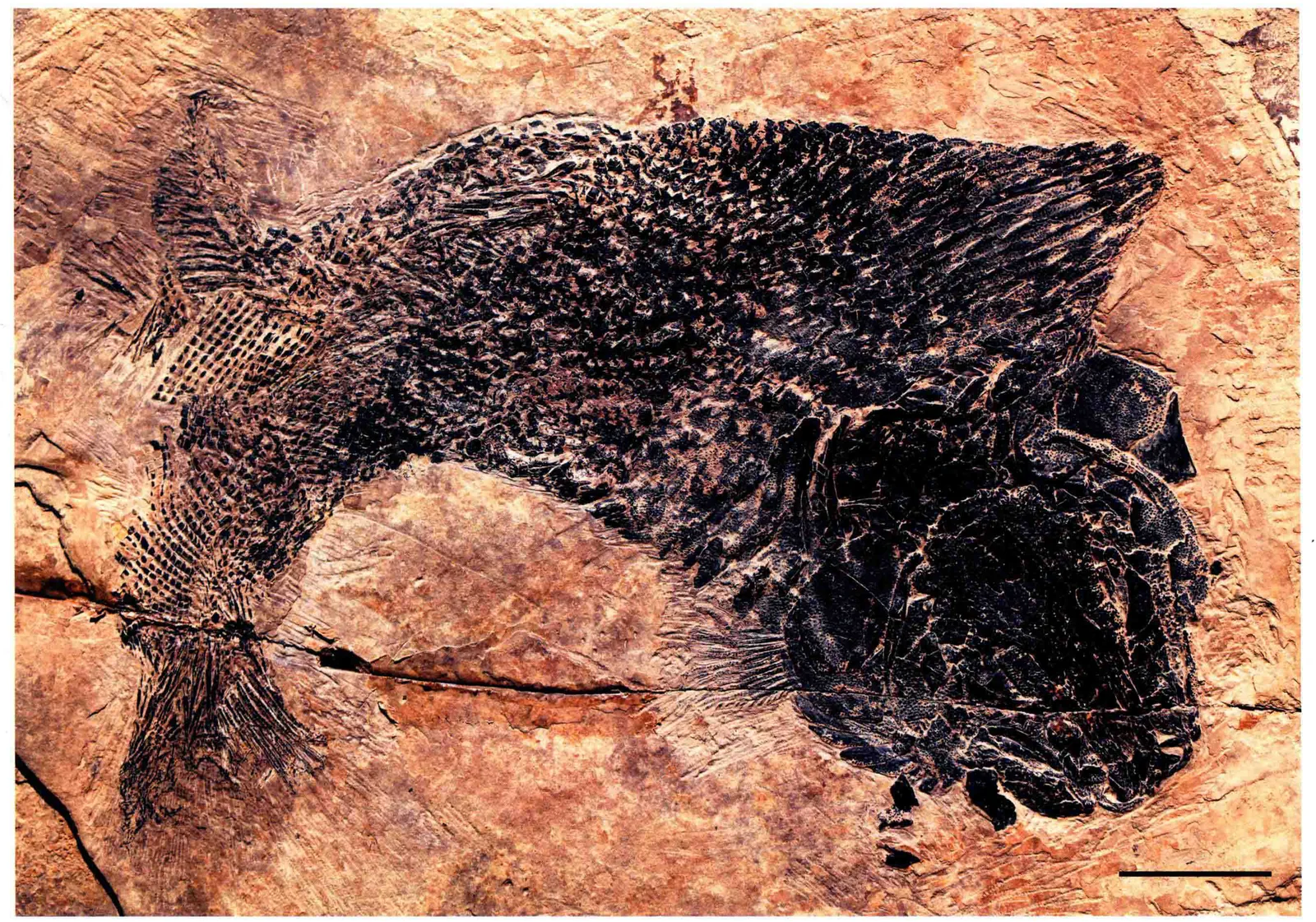
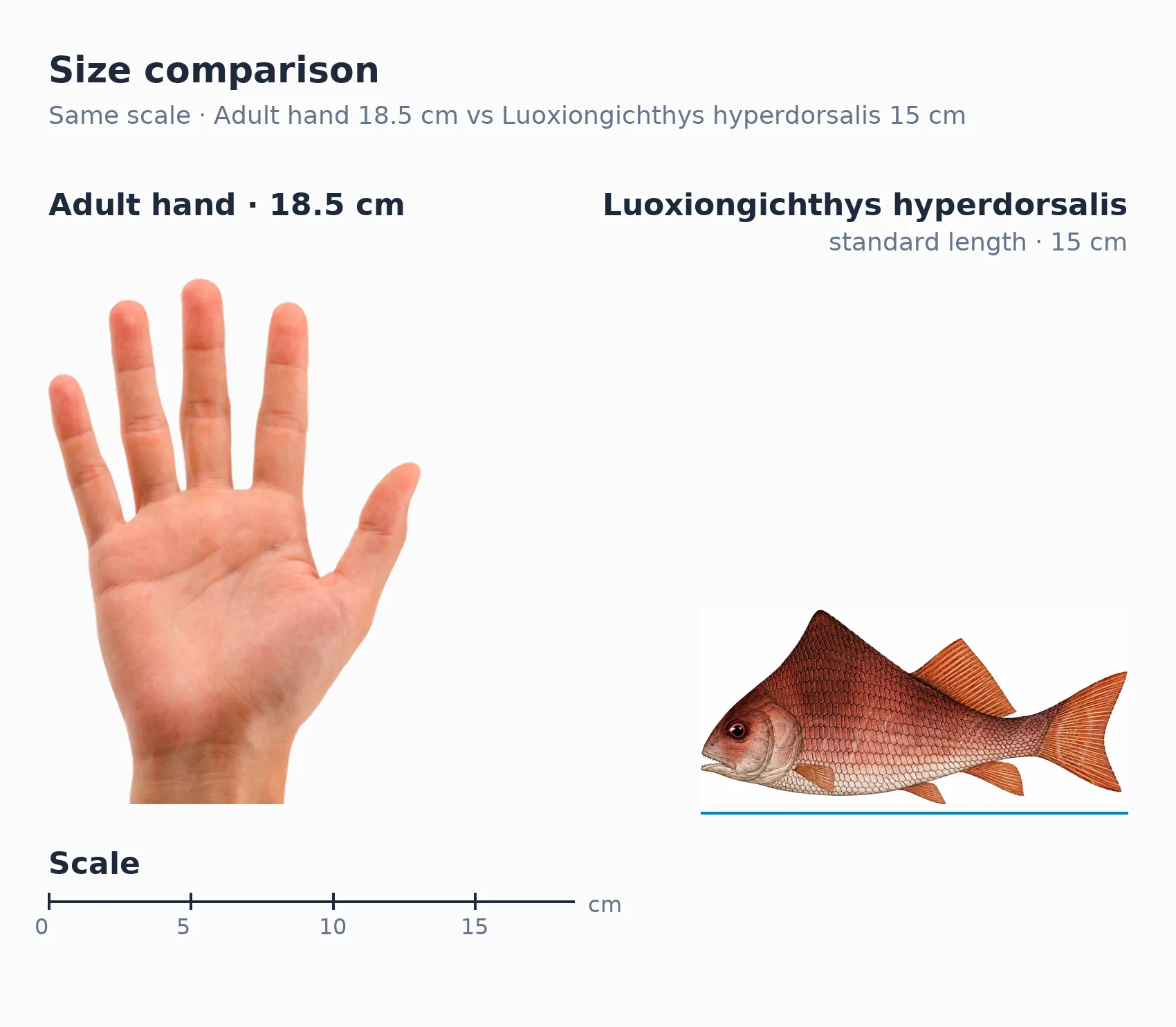
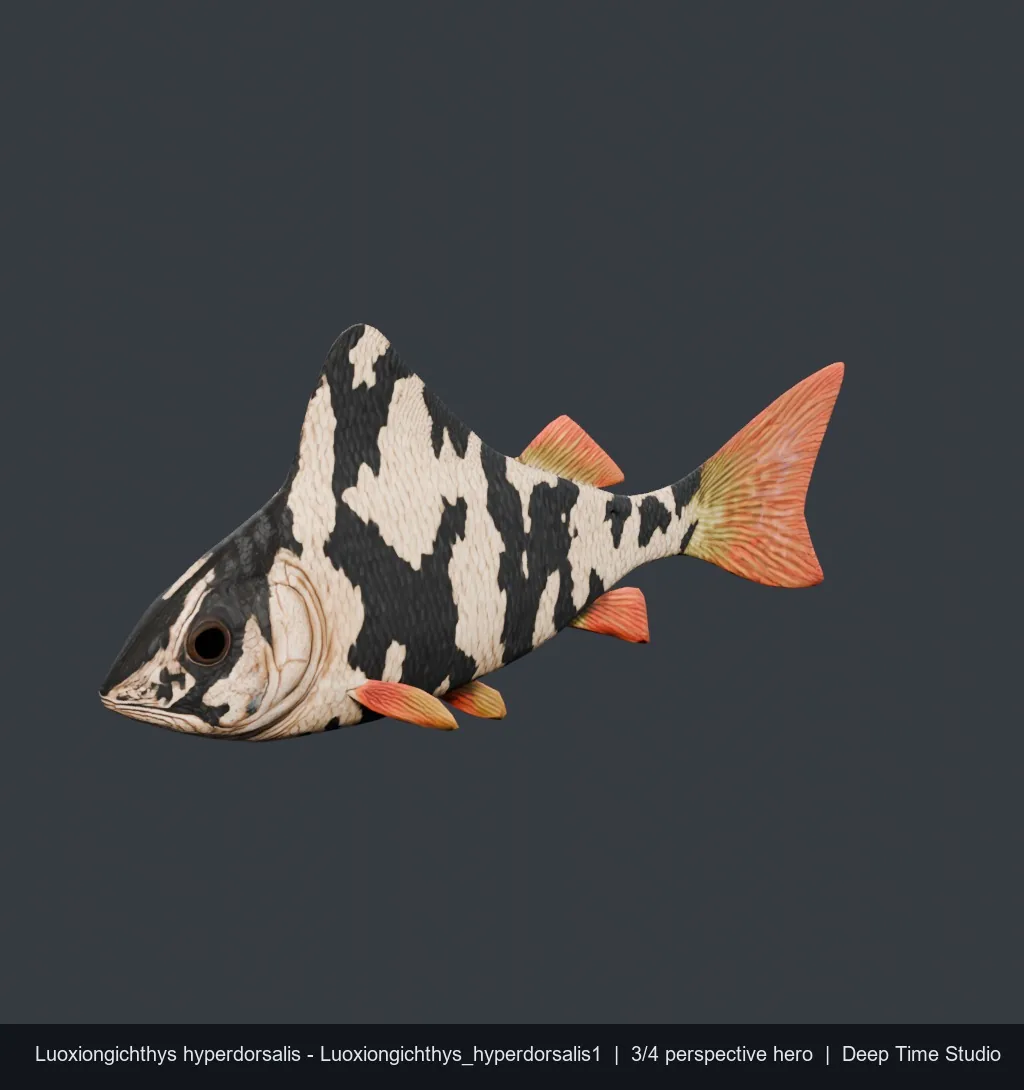
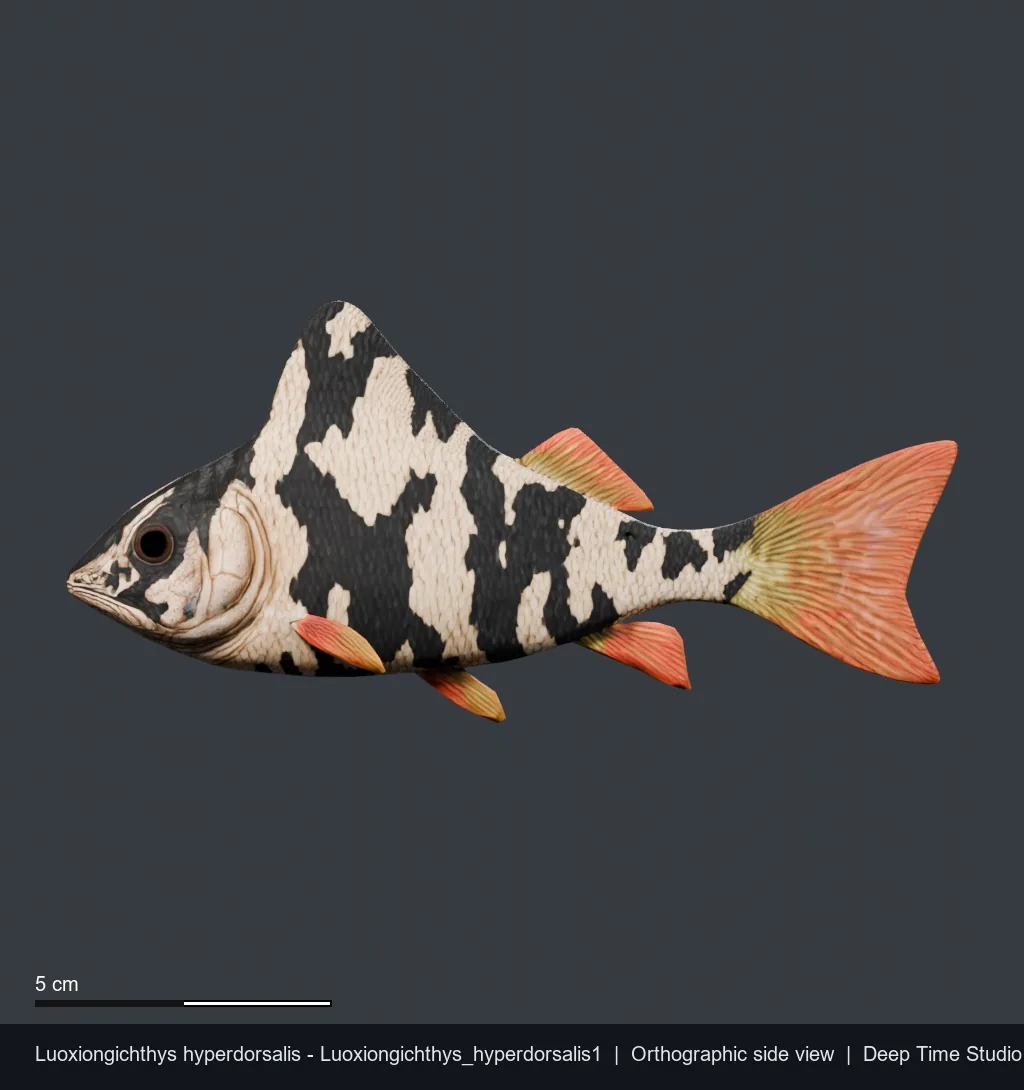
Luoxiongichthys hyperdorsalis is an early holostean ray-finned fish from the Middle Triassic (Anisian, ~245-243 Ma) Guanling Formation near Luoping, Yunnan, China, first described in 2011. About 15 cm long, it is instantly recognisable by the strange hump in front of the dorsal fin: the extraordinarily tall back makes the body triangular in frontal view, and in lateral view the gibbous structure resembles a reversed shark dorsal fin with a clearly convex anterodorsal margin. The skull carries a free maxilla, a slender near-vertical preopercular, three suborbital bones and at least eight robust branchiostegals with tubercles and comb-like ornament on the anterior margin; two postcleithra are present. The ganoid scales bear tubercles with comb-like ornament on the posterior margin and interlock through ball-and-socket joints, and the hemiheterocercal tail is weakly forked. Cladistic analyses place it among the holosteans, possibly as a basal halecomorph or a semionotiform, close to the ancestry of modern gars. The remarkable reversed-shark-fin dorsal structure is very narrow and should have caused little drag in forward swimming; the unusual back was probably used for intraspecific display and may have required constant fin adjustments to hold the fish upright. Body shape indicates a reef-dwelling animal: a slow but highly maneuverable swimmer feeding on small seabed invertebrates.