Robustichthys luopingensis
Kyphosichthyidae
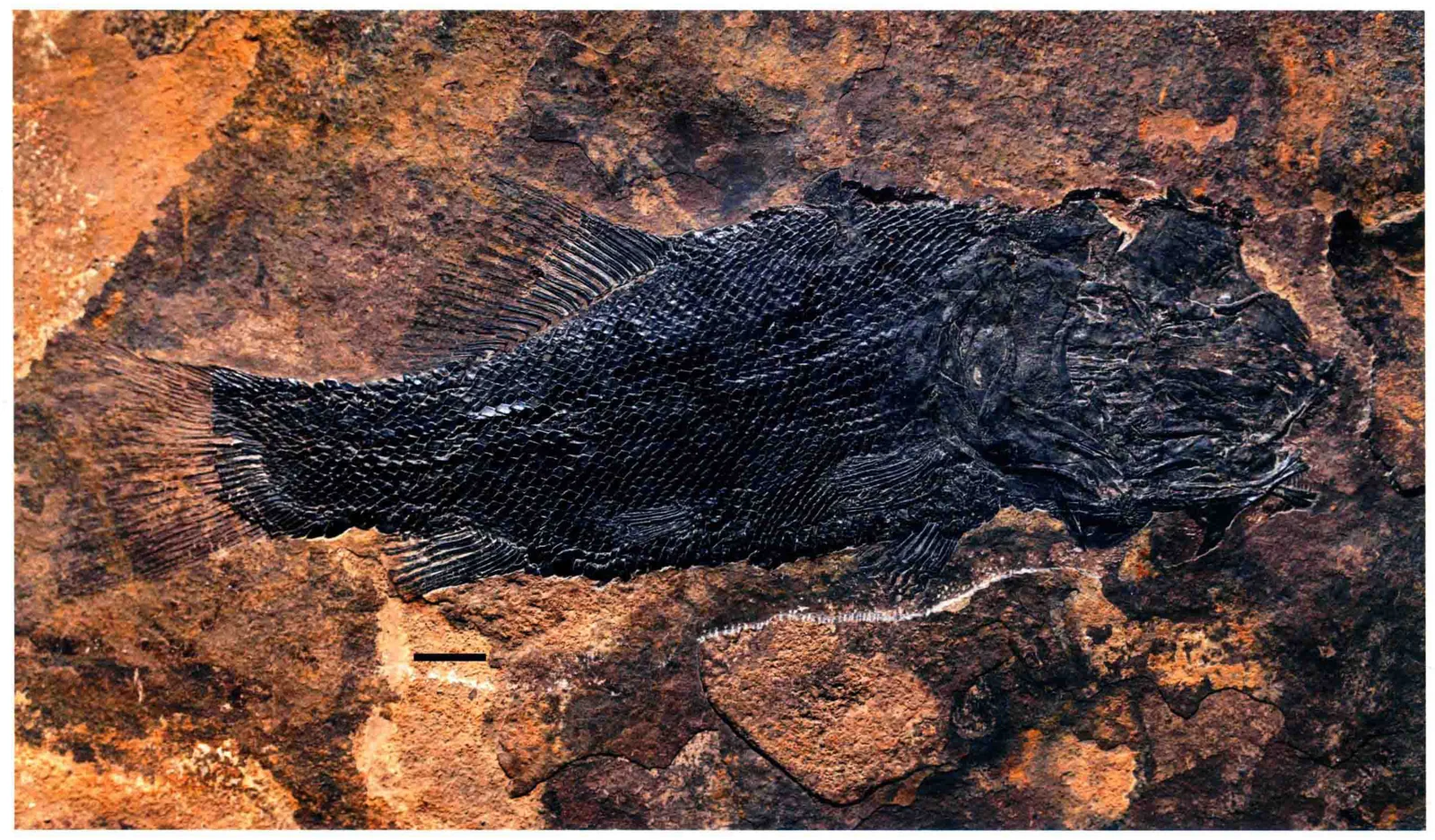
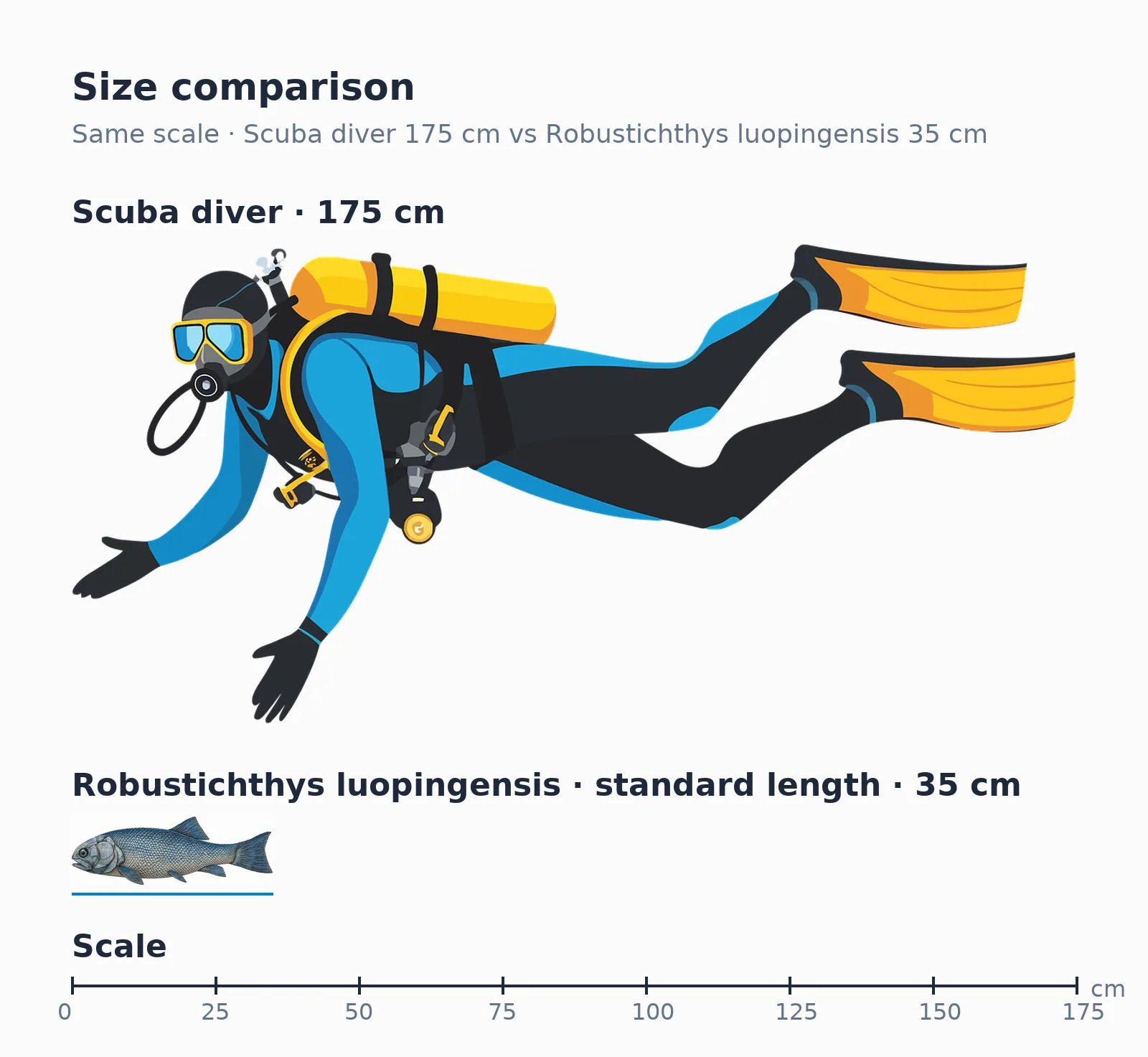
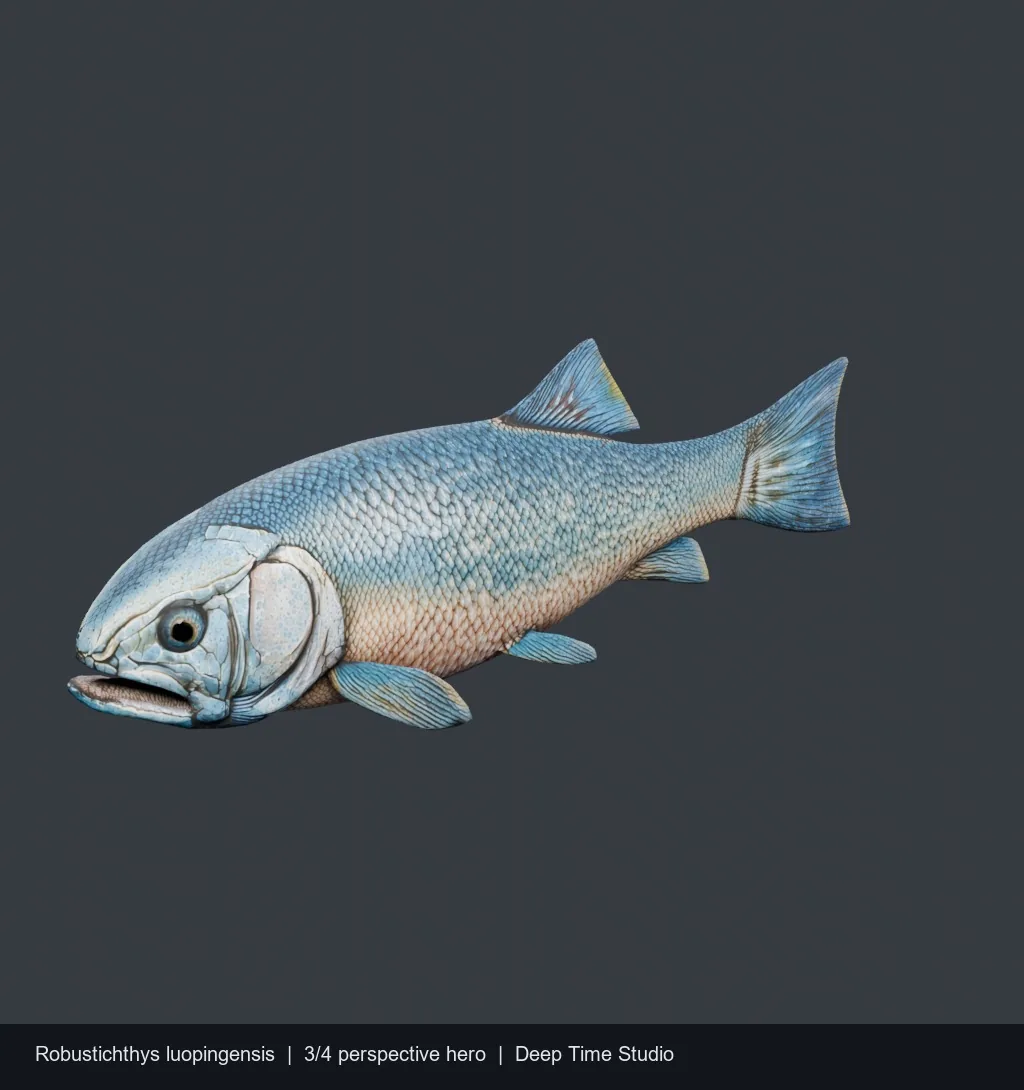
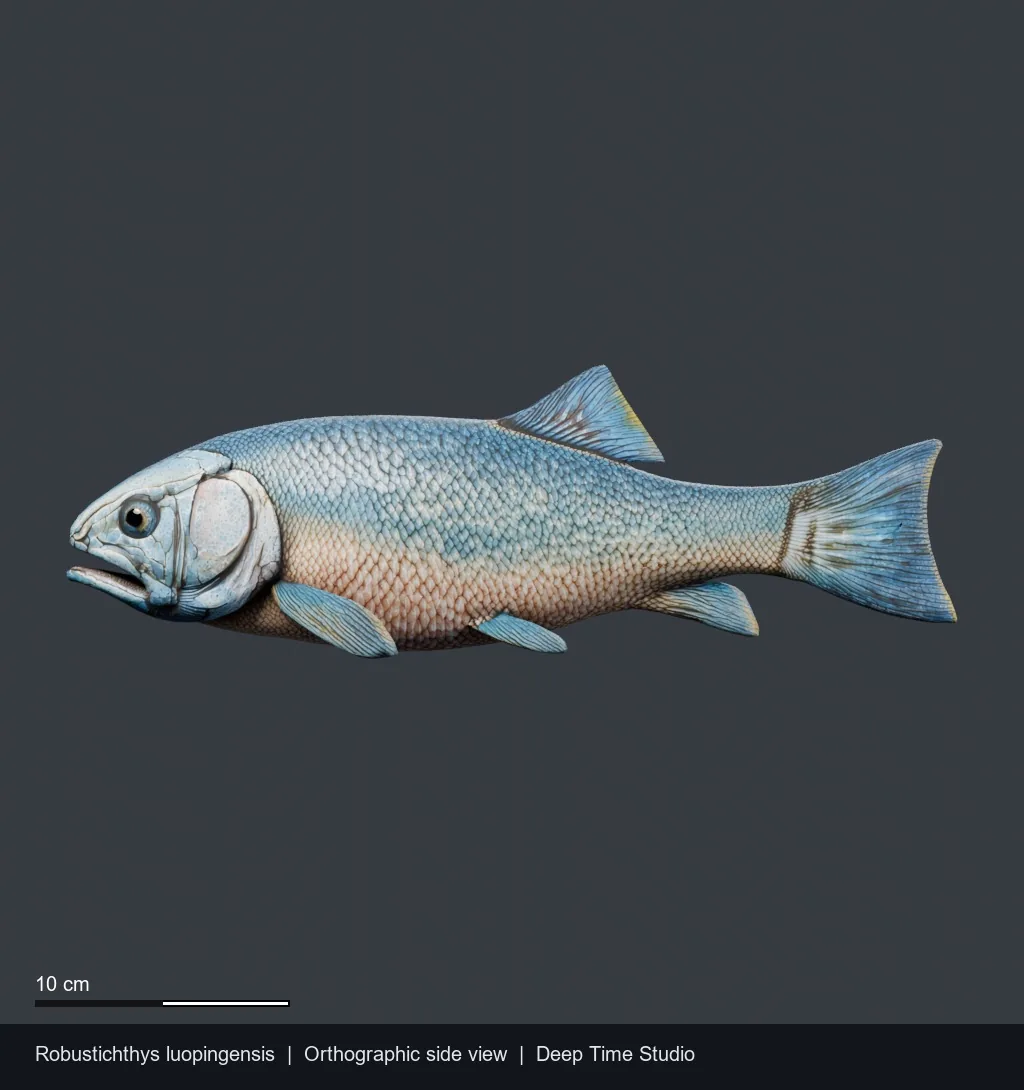
Robustichthys luopingensis is a halecomorph neopterygian from the Middle Triassic (Anisian, ~244 Ma) Luoping Biota of Yunnan, China. It is the largest halecomorph fish known from the Middle Triassic, reaching a total length of about 40 cm, and was first reported and named in 2014 from the Guanling Formation. It belongs to the ray-finned fishes (Actinopterygii) and, within them, to the Halecomorphi.
The body is covered in scales and ends in a non-forked caudal fin; in the fossils the skull is dorsoventrally flattened into a triangular outline. The caudal morphology indicates a slow swimmer that could not chase fast prey, so it was most likely an opportunistic ambush predator that remained concealed and seized prey as it came within reach.
Its systematic position was long debated: some authors regarded it as a member of the Halecomorphi, others placed it among the ionoscopiforms. A 2019 revision based on nine newly collected specimens clarified the disputed skull characters (including the vomer, parasphenoid, premaxilla, palatine, sclerotic ring, quadratojugal and hyomandibula) and placed Robustichthys as one of the earliest representatives of the Ionoscopiformes, providing key evidence for reconstructing halecomorph phylogeny.