Sinosaurosphargis yunguiensis
Saurosphargidae
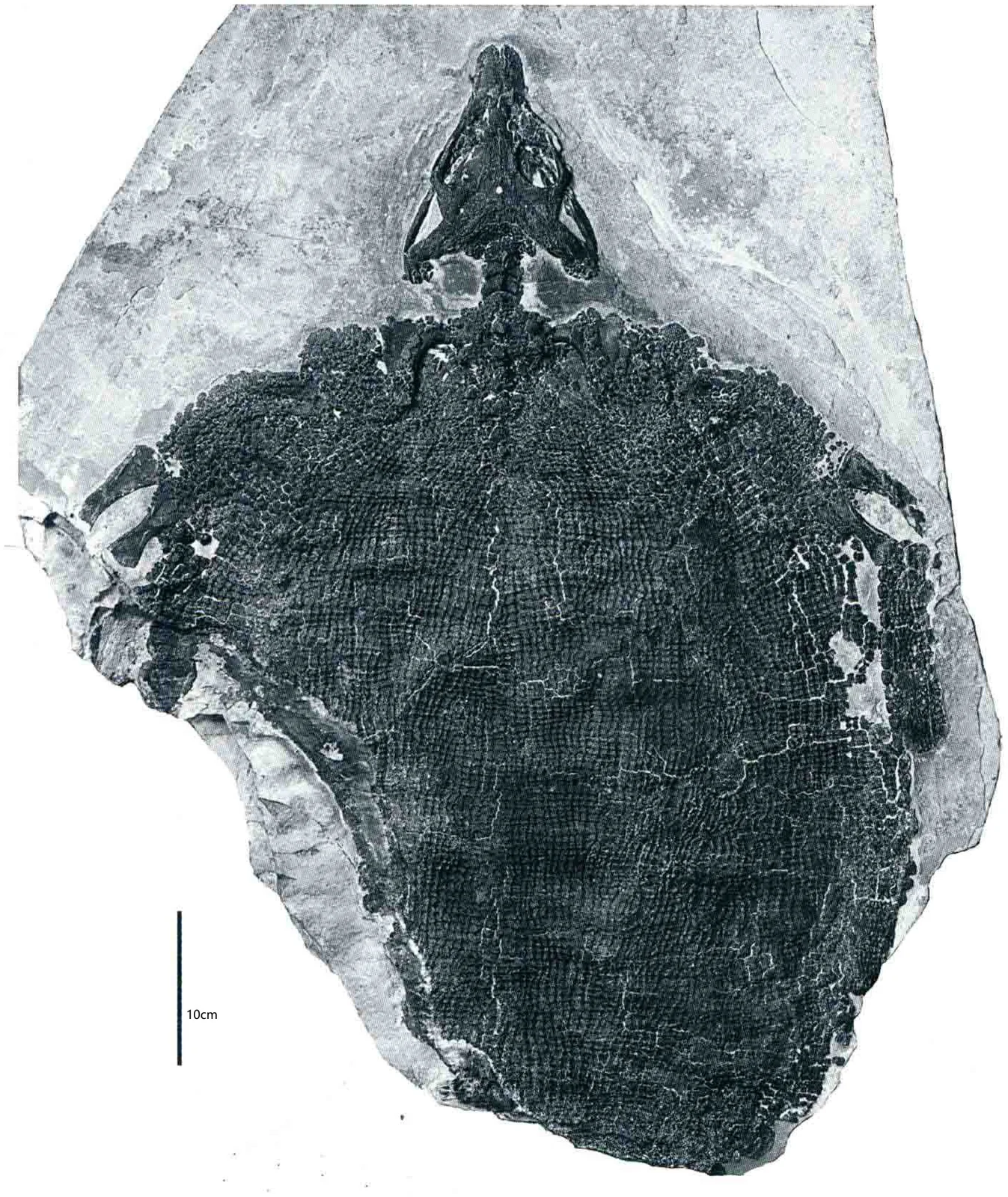
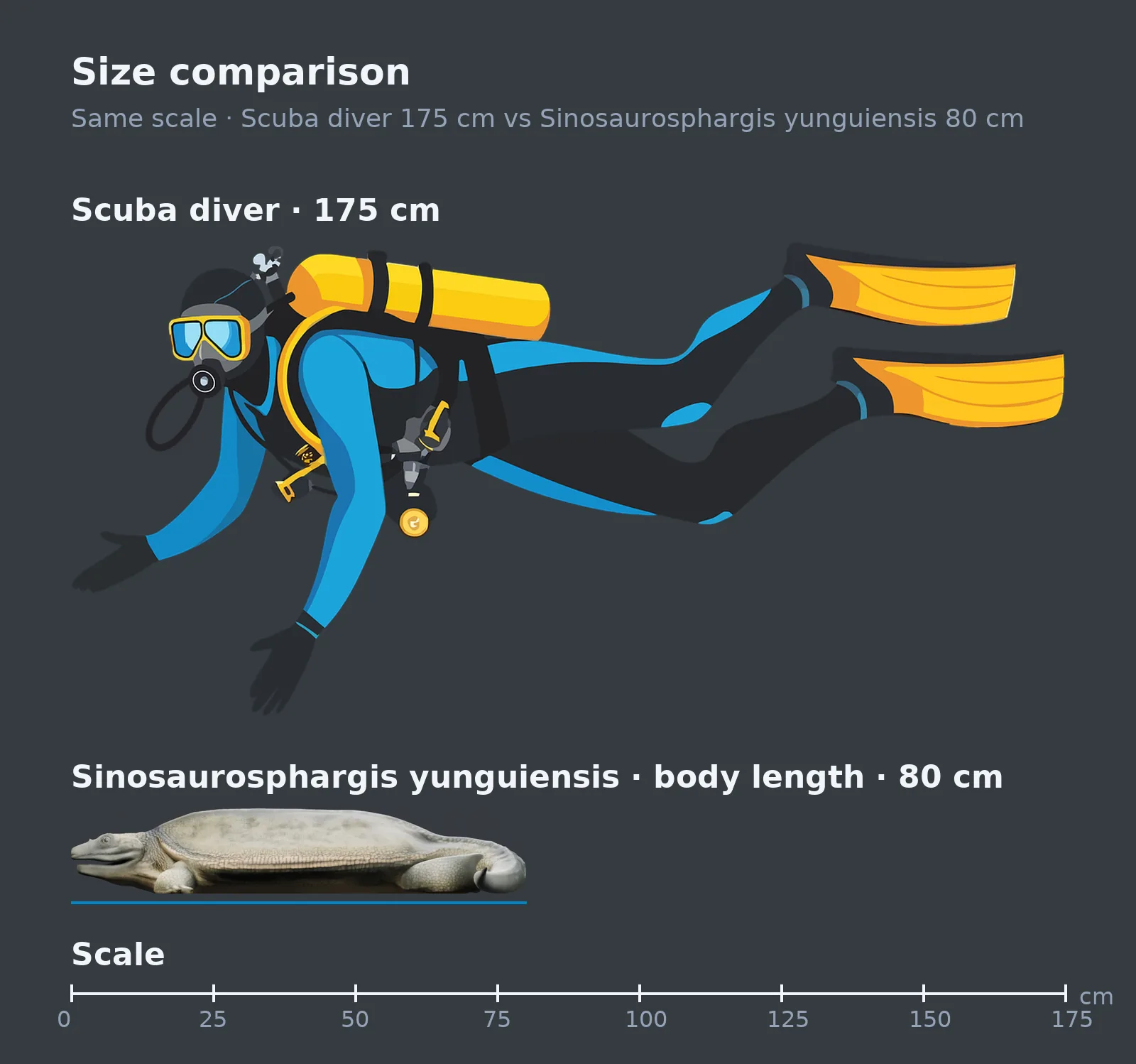
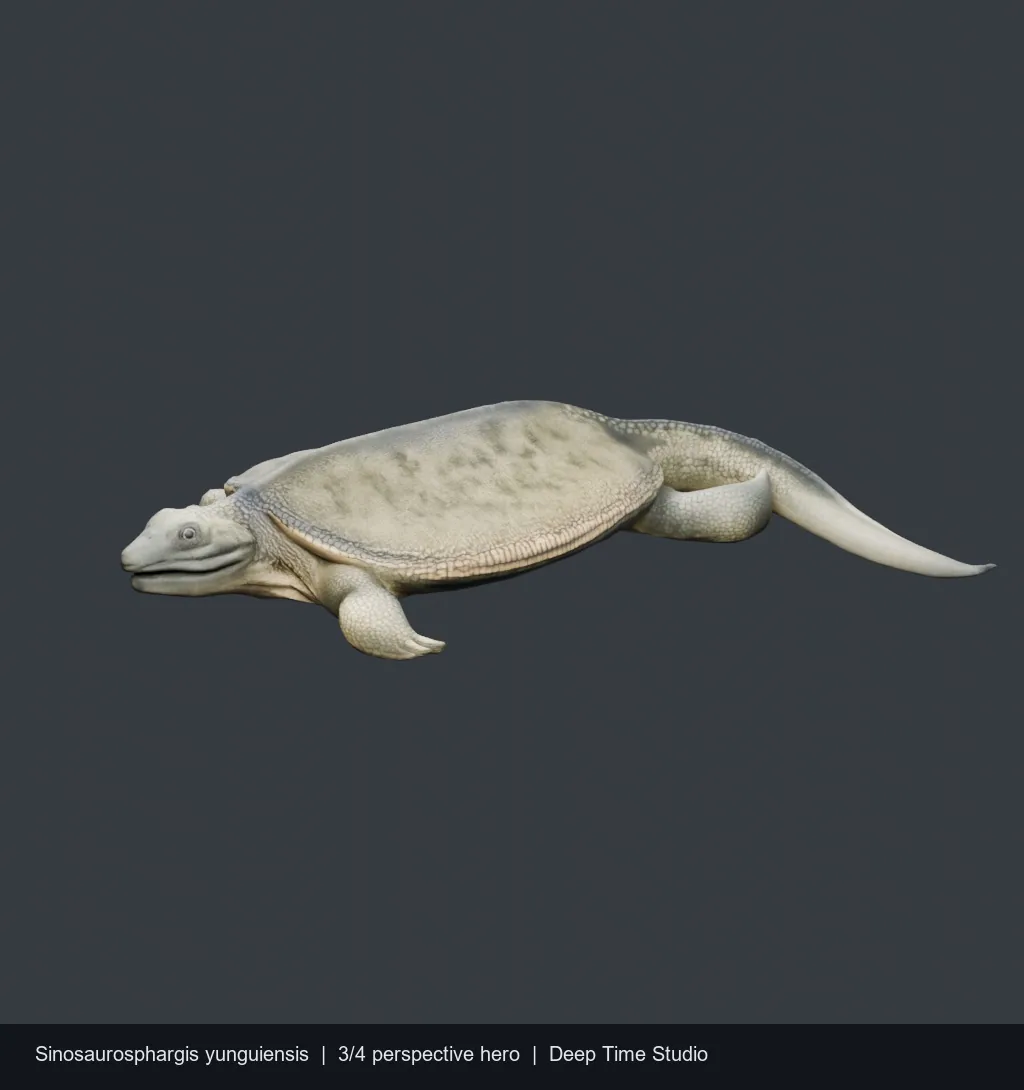
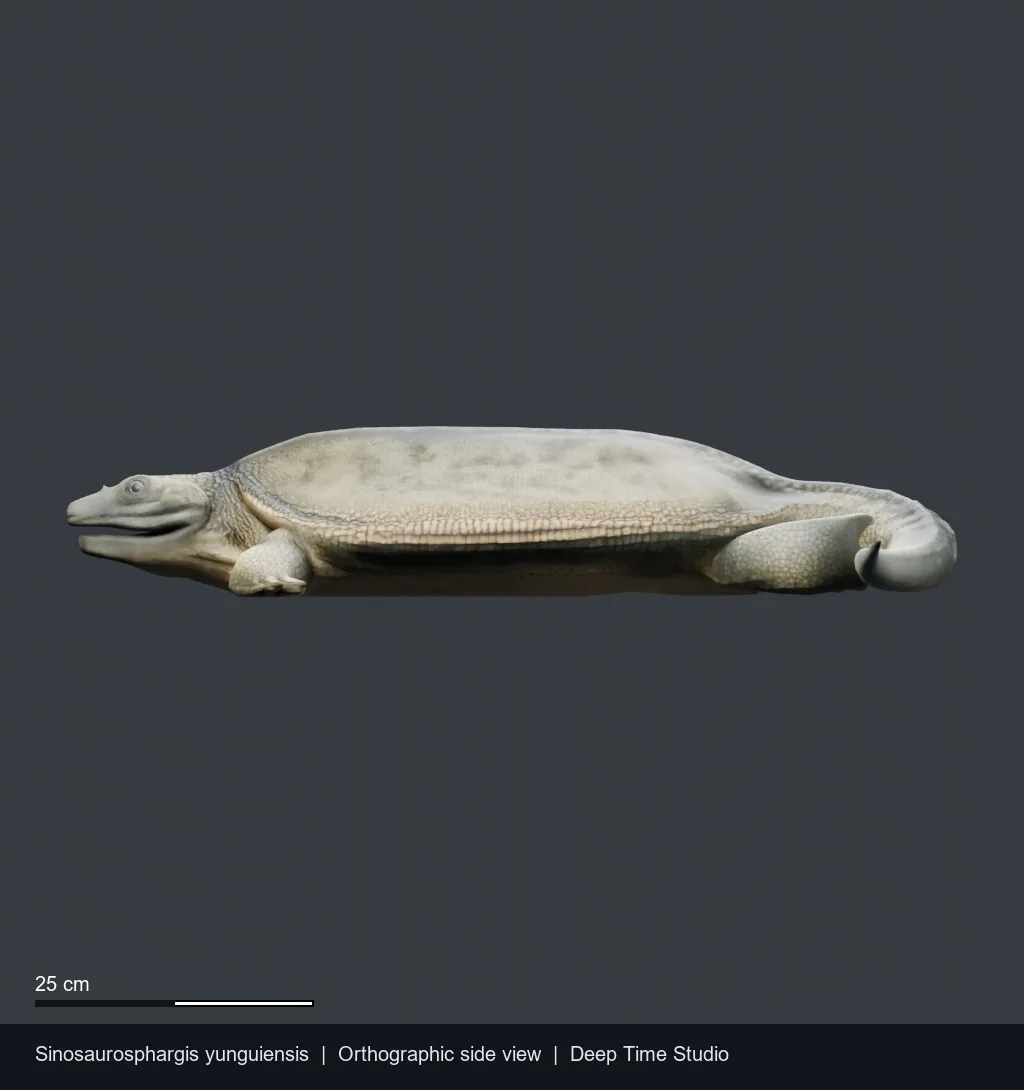
Sinosaurosphargis yunguiensis is a highly specialized marine diapsid reptile. Its upper temporal fenestra is closed while the lower one remains fully open. The body is covered by a carapace-like shield of countless dermal ossicles; unlike placodonts such as Placodus, these small bony plates cover not only the trunk but also the limbs and tail vertebrae. Its peculiar dentition and the transversely broadened, hook-shaped ribs resemble the European saurosphargids ("dragon-turtles"). The ribs are extremely expanded, with adjacent ribs meeting end to end, much as in turtles, though the animal differs from true turtles in other essential characters. Phylogenetic analysis places it closer to thalattosaurs and eosauropterygians (nothosaurs and relatives). The fossil was discovered in 2011 by the Institute of Vertebrate Paleontology and Paleoanthropology (Chinese Academy of Sciences) together with the Zhejiang Museum of Natural History, in Middle Triassic marine limestone of Panxian (Guizhou) and Luoping (Yunnan). The discovery shows that the Triassic marine reptile fauna of South China was closely connected with the western Tethyan fauna of Europe.