Yudaiichthys eximius
Lashanichthyidae
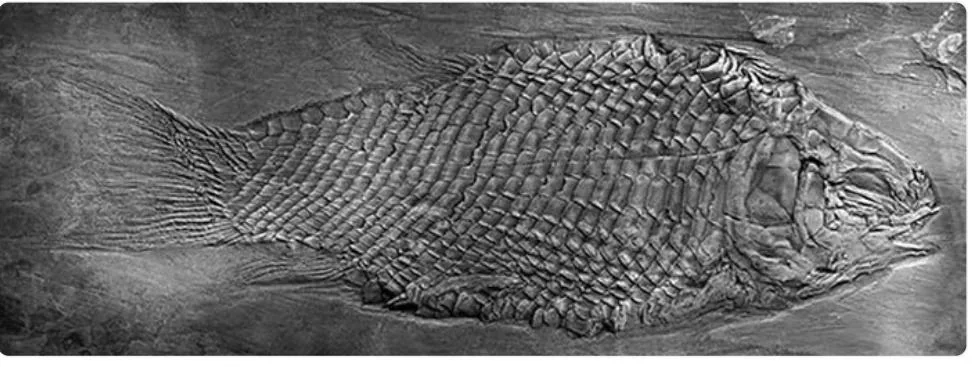
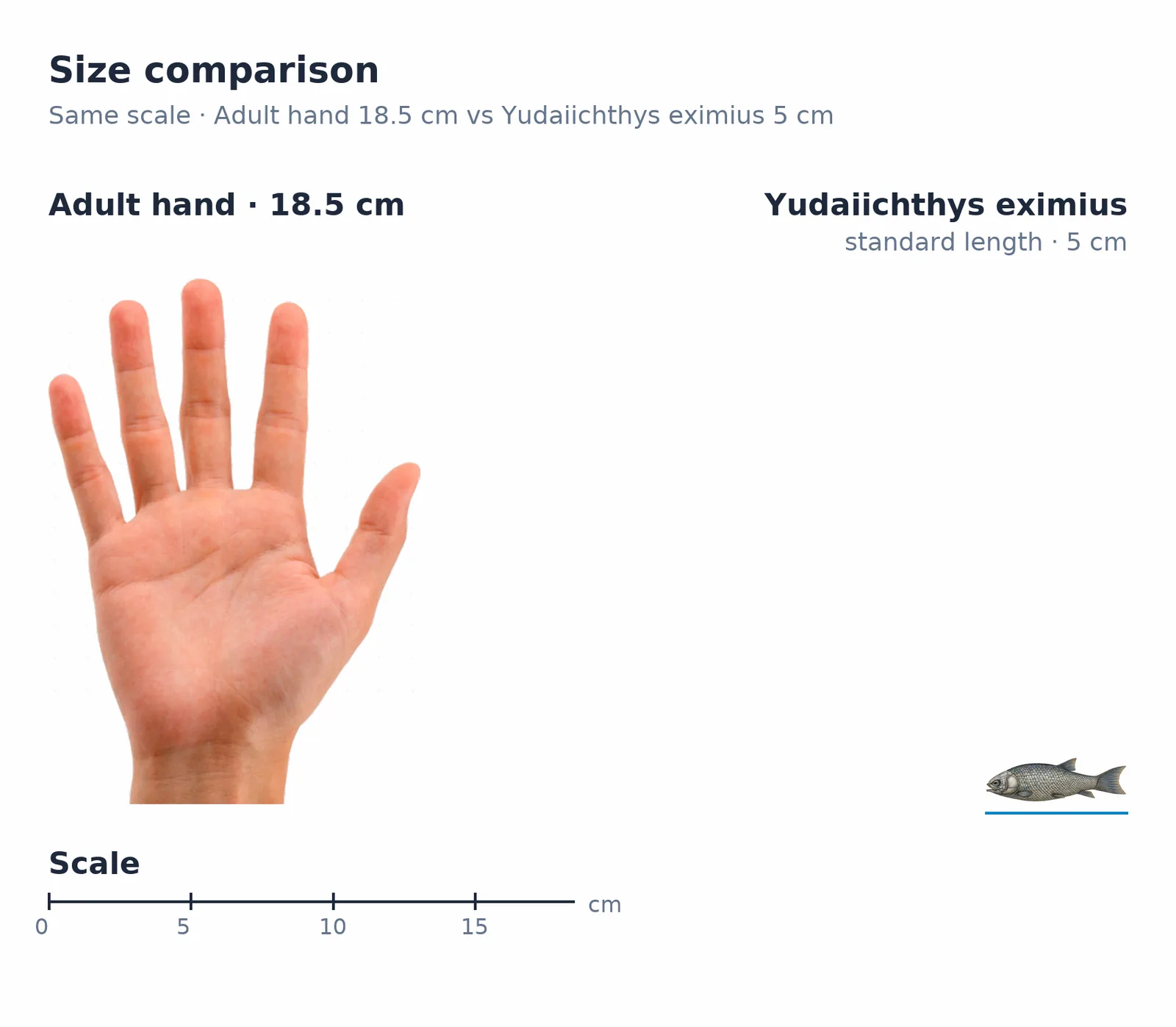
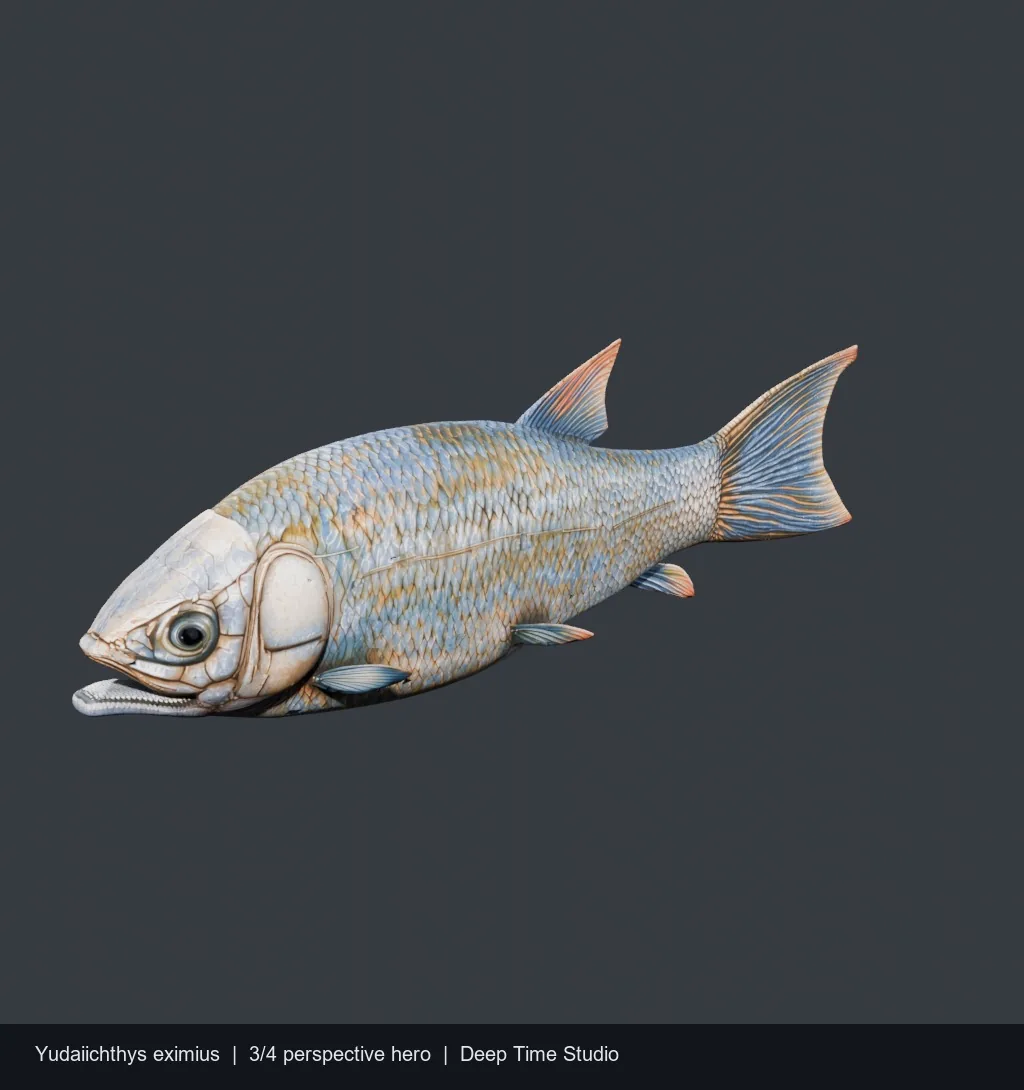
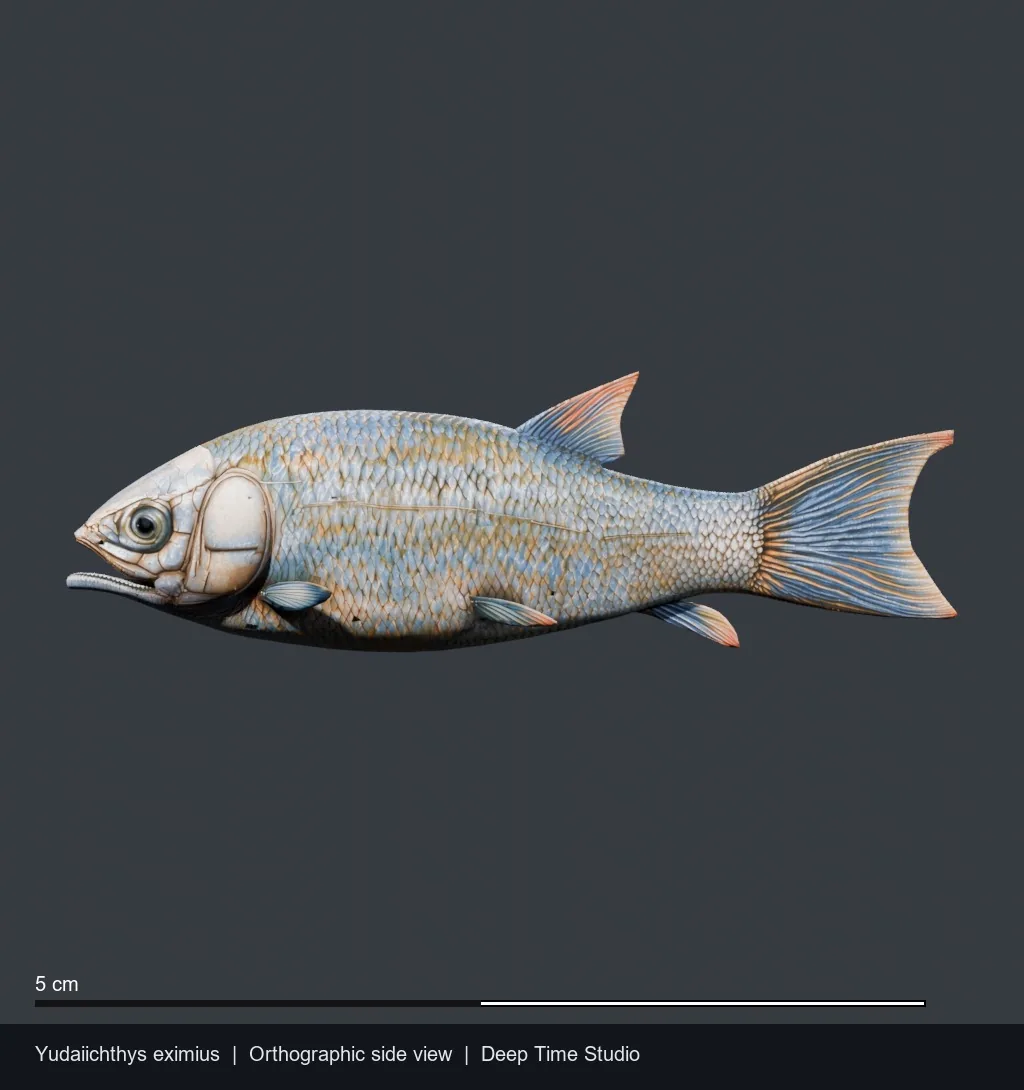
Yudaiichthys eximius is a small halecomorph neopterygian from the Middle Triassic (Anisian) Luoping Biota of Yunnan, China, described from four specimens from Member II of the Guanling Formation. It is one of the earliest known ionoscopiform-grade fishes and, together with the other arctoscan* forms of the Luoping Biota, documents the rapid early diversification of halecomorphs during the recovery from the end-Permian mass extinction. The genus name refers to the Yudai (jade-belt) lake below Mt. Baila near Luoping. The body is fusiform with a blunt snout; the caudal fin is slightly forked, and the dorsal-fin origin lies slightly behind that of the pelvic fin. The deepest point of the body lies between the posterior margin of the operculum and the dorsal-fin origin. The type specimen has a head length of 15 mm, a body depth of 19 mm and a standard length of 47 mm, and the largest known specimen reaches 56 mm standard length. Small tubercles ornament the anterior frontal, the anterior circumorbital bones and the lower jaw, while the rest of the skull roof is largely smooth. The nasal is hourglass-shaped and relatively wide, and the frontal is about 1.5 times the length of the parietal. There is a single supraorbital and nine infraorbitals, arranged in two vertical columns (four, sometimes three, between the lacrimal and the postero-ventral infraorbital). A membranous hyoid is present; the preoperculum and the membranous dermopterotic no longer contact each other; the operculum is twice the height of the suboperculum (excluding the anterodorsal process); the maxilla is reduced, and the gular plate is pear-shaped and half the length of the lower jaw.