Asaphida
Asiocephalus sulcatus
Order Asaphida / Superfamily Asaphoidea / Family Ceratopygidae
Stage 10 (Furongian, Cambrian)Zhejiang, Xinjiang, Hunan
Classification
Order Asaphida / Superfamily Asaphoidea / Family Ceratopygidae
Genus
Asiocephalus Palmer, 1968
Genus author
Palmer A. R.
Genus etymology
asi, abbreviation of Asian; -cephalus, head
Species
A. sulcatus (Lisogor, 1970)
Species author
Lisogor K. A.
Species etymology
sulcatus, Latin, furrowed
Age
Stage 10 (Furongian, Cambrian)
Distribution
Zhejiang, Xinjiang, Hunan
Synonyms
Hedinaspis sulcata; Hedinaspis (Asiocephalus) sulcata; Hedinaspis tianshanensis
Diagnosis
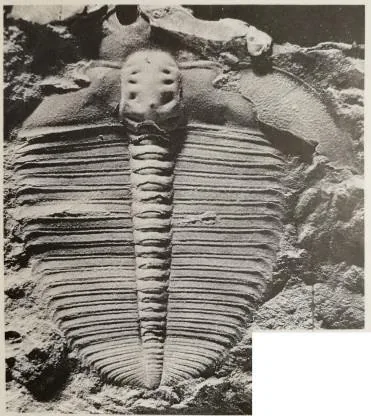
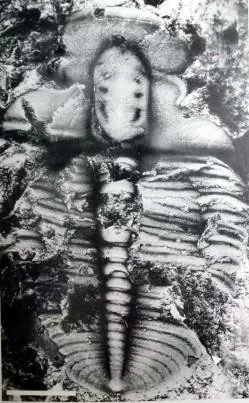
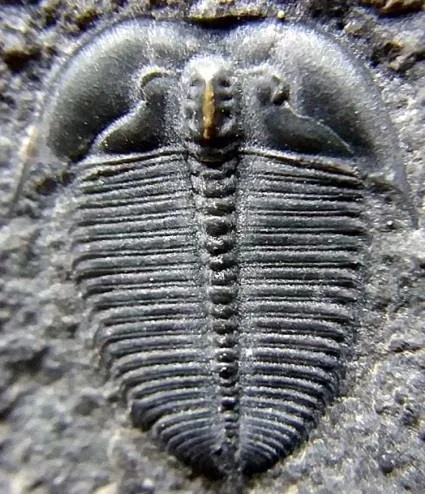
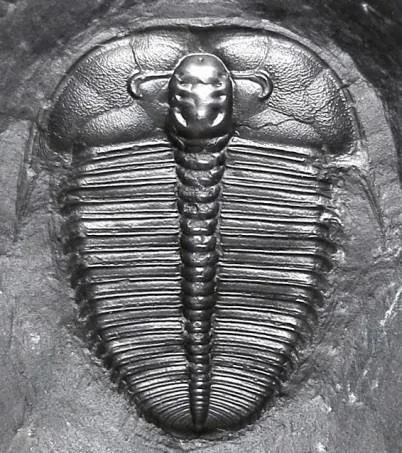
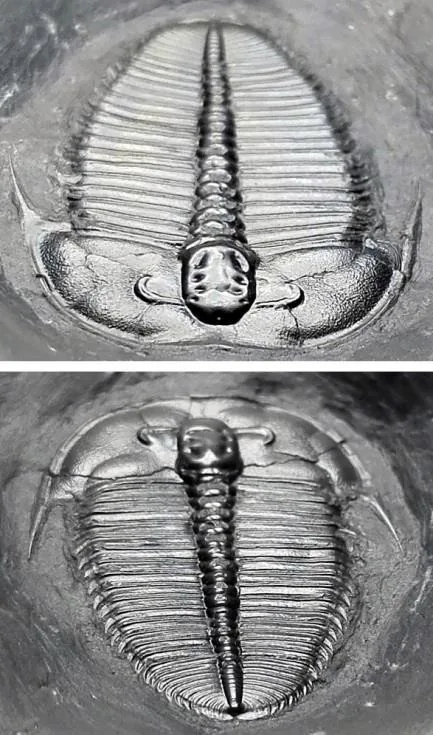
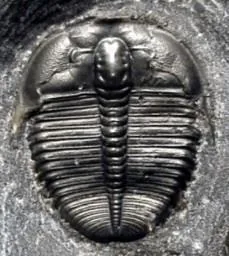
Dorsal shield elongate-elliptical. Cranidium subtrapezoidal; glabella subcylindrical, with a pit at the centre of the top, with 4 pairs of glabellar furrows not connected to the dorsal furrows: S1 deep and wide, strongly inclined backward, with a glabellar node between them, S2 and S3 pit-like, nearly horizontal; occipital furrow deep and wide laterally; fixigenae with faint reticulate ornament, posterior wings large; eye ridges narrow and convex, nearly horizontal in extension; palpebral lobes small, arcuate; preglabellar field wide, with an inverted-triangular depressed area in front of the glabella; anterior border extremely narrow and convex; anterior branches of facial sutures slightly inclined outward-forward, posterior branches long; librigenae large and wide with slender long genal spines, genal field with distinct radiating reticulate ridges. Thorax of 22 segments, axis convex and extremely narrow; pleural lobes wide and flat, pleural segments horizontal, pleural and interpleural furrows roughly parallel, pleural spines short. Pygidium small, posterior margin often concave medially.
Remarks
This species has long been regarded as Hedinaspis regalis; the two are very similar, but the latter differs in having a shorter preglabellar field and a smaller, fish-tail-shaped pygidium.