Redlichiida
Yinites malongensis
Order Redlichiida / Suborder Redlichiina / Superfamily Redlichioidea / Family Yinitidae
Cambrian, Series 2, Stage 3Yunnan
Classification
Order Redlichiida / Suborder Redlichiina / Superfamily Redlichioidea / Family Yinitidae
Genus
Yinites Lu, 1945
Genus author
Lu Yanhao
Genus etymology
Yin — named for the noted Chinese geologist and paleontologist Mr Yin Zanxun, who collected the type
Species
Y. malongensis Luo in Luo et al., 1994
Species author
Luo Huilin
Species etymology
Malung, type specimenstype locality
Age
Cambrian, Series 2, Stage 3
Distribution
Yunnan
Diagnosis
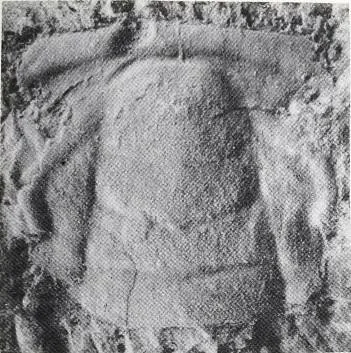
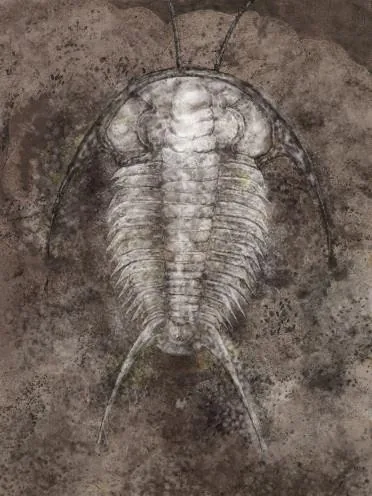
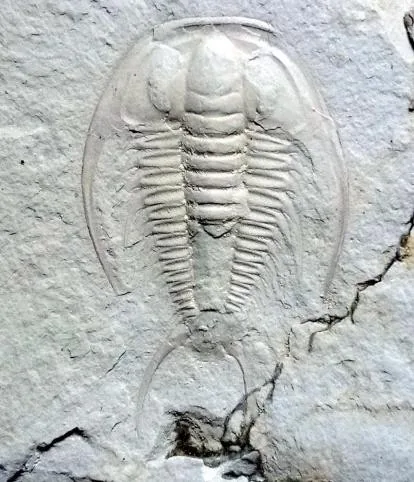
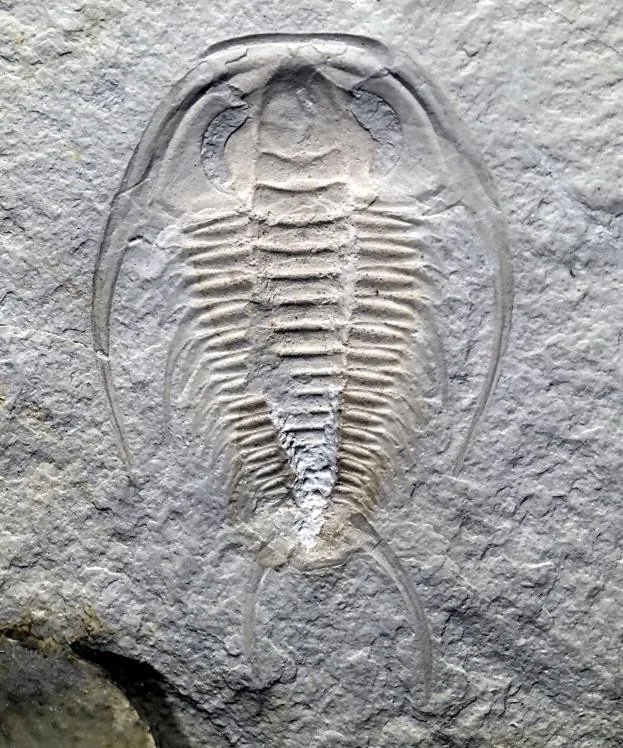
Dorsal shield elongate-oval, surface densely covered with fine nodes. Cranidium subsquare; glabella raised, broadly conical, with three pairs of glabellar furrows; inner border absent, outer border raised; eye ridge short; palpebral lobe of moderate size; fixed cheek narrow, posterior limb slender and long; preocular wing small and broadly triangular; anterior facial suture branches diverging outward, posterior branches directed outward and backward; free cheek narrow and long, genal spine Curved, slender, distal end close to the pygidium. With thirteen thoracic segments; Each ring with one node at the middle of the axis; Pleural spines long and curved, pleural spine of 4th segment distinctly longer, but not in some individuals Distinct. Pygidium subsquare; Pygidial axis divided into four axial rings, anterior three rings narrow, last one long; Pleural lobes with three pairs of pleural segments, anterior two pairs extending outward into two pairs of small pygidial spines, posterior pair curved, slender and long, its tip nearly reaching the pygidium. Thorax with 13 segments, each with a node at midlength of the axis; pleural spines long and curved, those of segment 4 distinctly lengthened, though indistinct in some individuals. Pygidium subquadrate; axis divided into 4 rings, the anterior three narrow, the last long; pleurae with three pairs of ribs, the anterior two pairs extending outward as two pairs of small pygidial spines, the last pair extending backward as one pair of large pygidial spines; posterior border broad and flat, slightly concave.