Phacopida
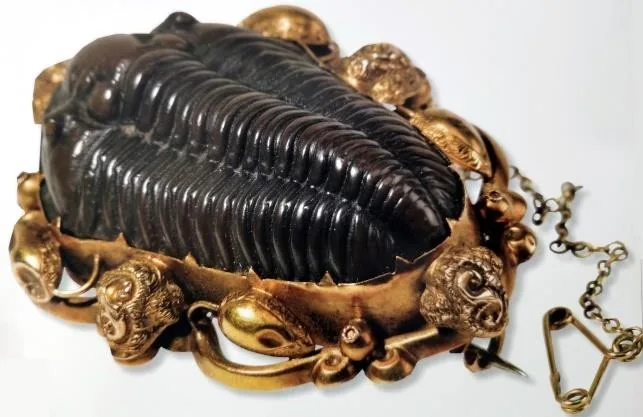
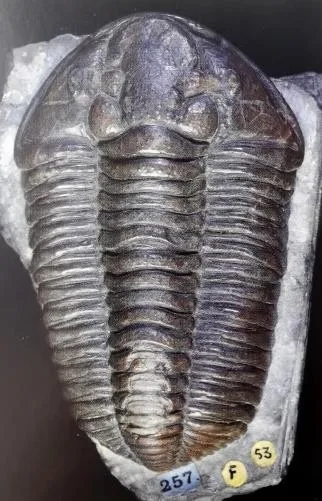
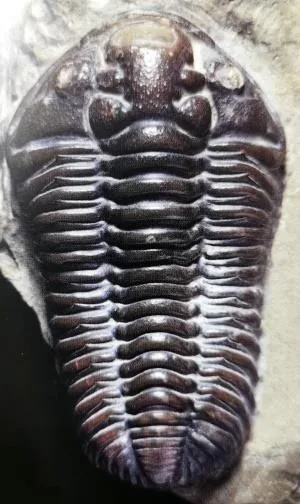
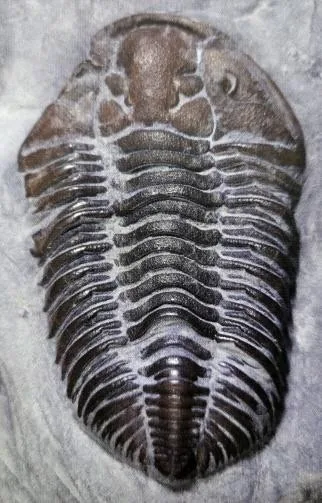
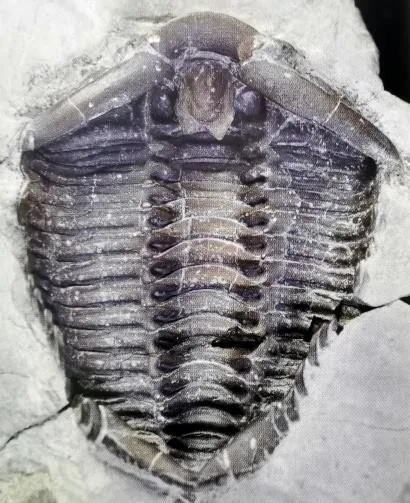
Calymene blumenbachii
Order Phacopida / Suborder Calymenina / Superfamily Calymenoidea / Family Calymenidae
Homerian (Wenlock, Silurian)UK
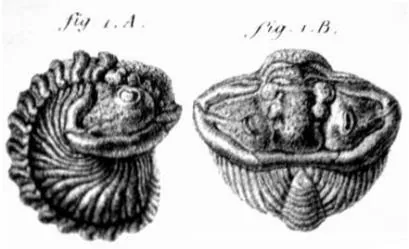
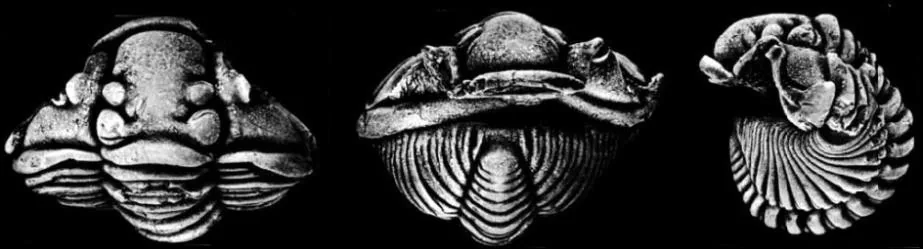
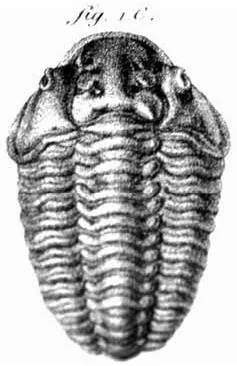
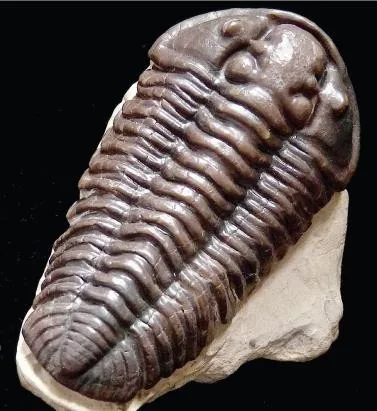
Classification
Order Phacopida / Suborder Calymenina / Superfamily Calymenoidea / Family Calymenidae
Genus
Calymene Brongniart, 1822
Genus author
Brongniart A.
Genus etymology
Calymene = Calymmene, from Greek kekalymmenē, covered, hidden
Species
C. blumenbachii Brongniart, 1822
Species author
Brongniart A.
Species etymology
this trilobite repeatedly in his works of the late 18th to early 19th centuries; his 1800 work inspired Brongniart's naming of this genus and species
Age
Homerian (Wenlock, Silurian)
Distribution
UK
Synonyms
Trilobus tuberculatus; Calymene blumenbachi; Calymene tuberculatus; Calymene lata
Diagnosis
Cephalon semi-elliptical; glabella bell-shaped, densely covered with fine nodes, three pairs of glabellar furrows, L2 nipple-shaped and connected to the opposite palpebral area of the fixigenae; gonatoparian facial sutures. Thorax of 13 segments, axis subequal in width to pleurae; pleural furrows deep, pleural ends rounded. Pygidium medium-sized, subrhomboidal; axis with 6 rings plus a terminal piece; border absent. Calymene is the first genus established in the modern classification of trilobites, and its author A. Brongniart is therefore regarded as the "father of trilobite systematics". This species is the type species of the genus Calymene
Remarks
and is the signature fossil of Dudley, England. It has played an extremely important role in trilobite research, including establishing that trilobites are arthropods. It is commonly known as the "Dudley Fossil", "Dudley Locust" or "Dudley Bug".