Asaphida
Eoisotelus orientalis
Order Asaphida / Superfamily Asaphoidea / Family Asaphidae
Darriwilian (Middle Ordovician)Hebei, Shandong
Classification
Order Asaphida / Superfamily Asaphoidea / Family Asaphidae
Genus
Eoisotelus Wang, 1938
Genus author
Wang Yu
Genus etymology
eo-, Greek, dawn, beginning; Isotelus, a trilobite genus name
Species
E. orientalis Wang, 1938
Species author
Wang Yu
Species etymology
orientalis, Latin, oriental, referring to the Chinese locality
Age
Darriwilian (Middle Ordovician)
Distribution
Hebei, Shandong
Synonyms
Eoisotelus mathieui; Eoisotelus suni
Diagnosis
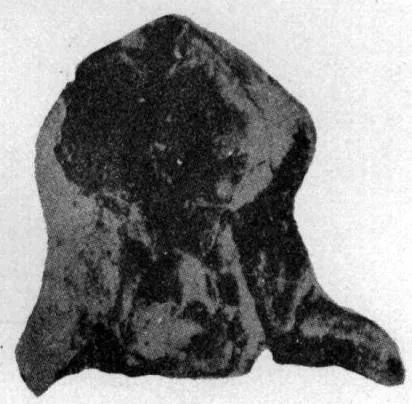
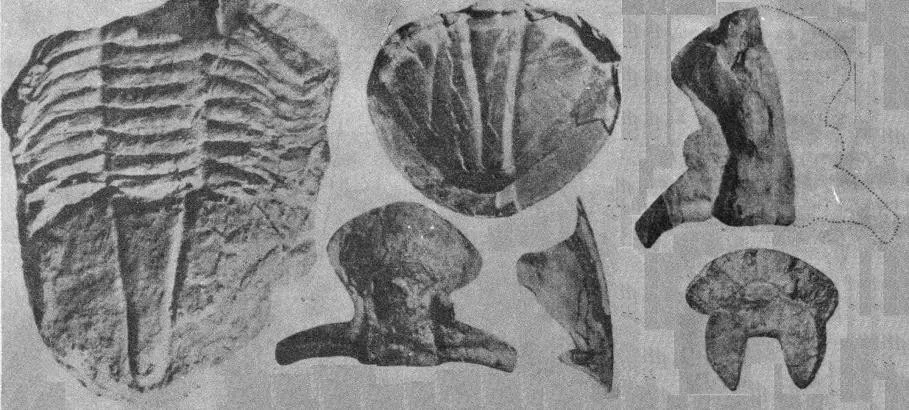
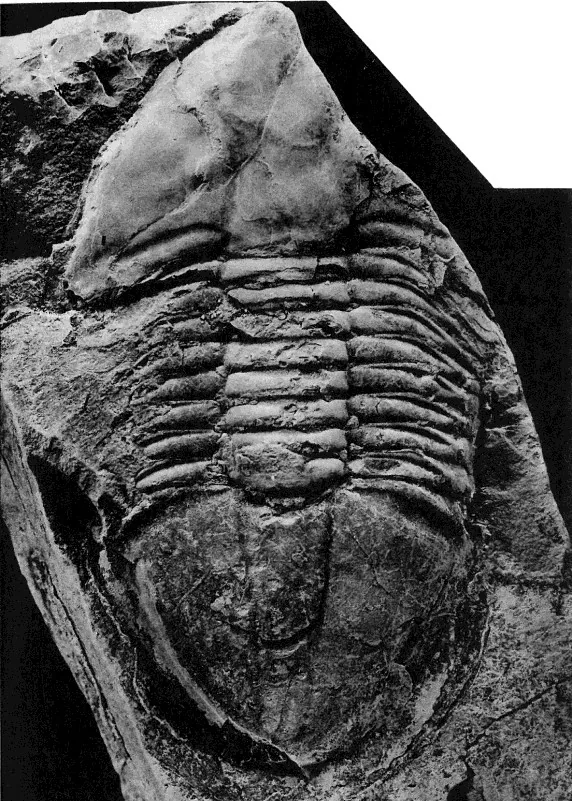
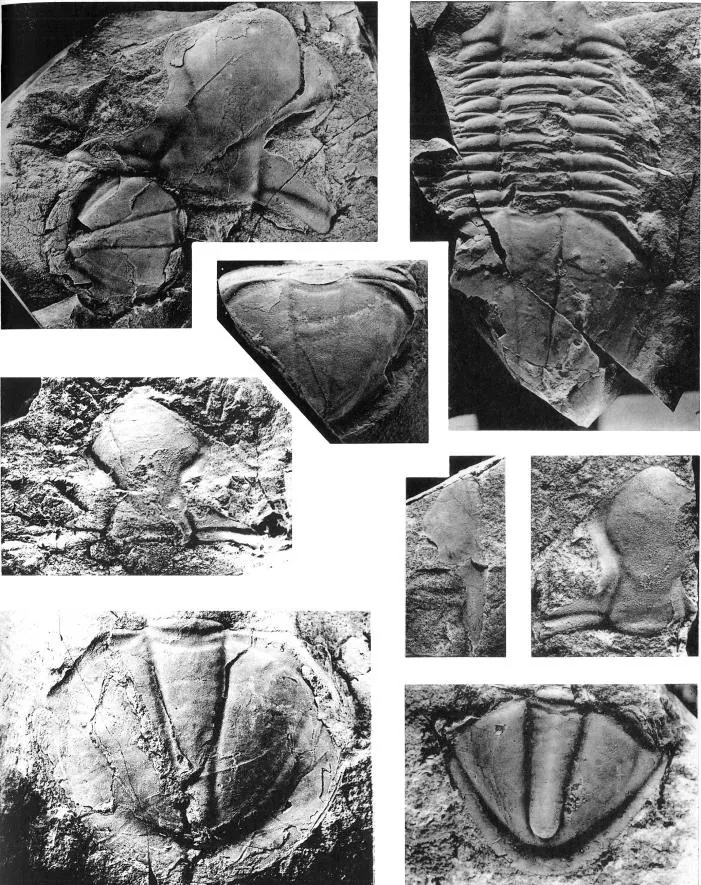
Dorsal shield long-ovate. Cephalon semicircular; glabella moderately convex, extending forward to the cranidial margin, hourglass-shaped, strongly constricted at the level of the palpebral lobes with a pointed front; occipital furrow shallow; palpebral lobes small, semicircular; librigenae wide with short, wide genal spines. Thorax of 8 segments; axis subequal in width to pleurae; pleural furrows deep, situated on the upper part of the pleurae. Pygidium semi-elliptical; axis long, moderately convex, not reaching the border furrow posteriorly, axial rings faint or absent in large specimens; border wide and flat, border furrow wide and shallow in large specimens.
Remarks
This species is the type species of the genus Eoisotelus and is among the largest Chinese trilobites. Mr. Zhang Wentang recorded a specimen of about 35 cm in his article "Reminiscences of Prof. Sun Yunchu".